Blog
Premises Liability Attorney: What Injured Visitors Should Know


A fall on a wet floor, damaged walkway, or broken step can leave you with pain, appointments, missed work, and calls you did not expect. If you are looking for a premises liability attorney, you may be trying to understand what happened and what to do next. This guide focuses on practical decisions after an injury in Marietta, Cobb County, and elsewhere in Georgia: how to record what you remember, organize papers, and prepare for a conversation with a lawyer.
Premises liability is a broad label for claims connected to an injury on property. A slip-and-fall is a familiar example, but the phrase does not decide who is responsible or whether a claim can succeed. The location, condition, timing, people involved, and available evidence all matter. The label is a starting point for asking questions, not a conclusion about the facts.
A premises liability attorney may listen to your account, review records, and investigate how the fall happened. Depending on what exists, that review can include photographs, incident documentation, witness observations, medical records, and communications with an insurer. The attorney can help identify unanswered questions and explain what information might matter. A lawyer cannot promise a particular result, and an article cannot determine whether a property owner is legally responsible in an individual case.
Karega Law Firm LLC handles slip-and-fall matters involving preventable accidents on unsafe property. It serves injured people across Georgia, with a focus on Marietta, Mableton, Cobb County, and the Atlanta metro area. The firm describes its work as investigating what caused a fall and gathering evidence such as photos and incident reports. Read the firm’s premises liability guidance for more about its slip-and-fall work.
It may be useful to ask for legal guidance when an injury has led to medical care, missed work, ongoing symptoms, or bills that are difficult to manage. You may also be unsure what to say to an insurance representative, whether an incident was documented, or how to make sense of a request for records. Those circumstances do not prove liability. They are reasons you may want someone to explain the process and help you understand what evidence is available.
Consider a conversation if you are uncertain about any of these points:
Not every fall requires a lawyer. A discussion may help clarify whether more investigation is warranted, or whether you can handle the immediate questions without representation. Karega Law Firm says it aims to give honest advice, including telling a prospective client if a lawyer is not needed. Its personal injury practice areas page offers a broader view of the work it handles.
Start with your health. If you are hurt, seek appropriate medical attention and follow the instructions of your health care provider. Tell the provider what symptoms you are experiencing and when they began. A symptom that seems manageable at first may still be worth discussing with a qualified clinician. This is general information, not medical advice, and it is not a reason to delay care while trying to gather evidence.
When you are able, write down what you remember in your own words. Include the date and approximate time, where you were, what you were doing, what you noticed before the fall, and what happened immediately afterward. You do not need to describe a detail you cannot recall. Mark uncertainty as uncertainty rather than filling a gap with a guess.
If you reported the incident to a property representative, note when you spoke and, if known, the person’s name and role. Keep any report or follow-up message you receive. If someone else was with you, ask whether they would be willing to write down what they recall. Do not pressure a witness to use particular words or to agree with your account.
Photographs may help show a condition and its surroundings if they can be taken safely and lawfully. Do not return to a hazardous area, trespass, or put yourself in danger to get a picture. If you already have images, keep the originals. If you can, note when they were taken and what they show. Do not alter an image to make a detail look clearer; preserve the original file as well.
Keep relevant papers and messages together. This may include medical paperwork, bills, appointment information, work records, incident documents, and insurance correspondence. You do not need to assemble a perfect file before asking for help. A simple folder or digital collection can make it easier to find information later.
People often remember the broad event but forget small details as days pass. A short, dated note can help preserve what you recall while making clear what you do not know. Separate direct observations from later information. For example, write “I saw water on the floor after I stood up” if that is what you observed; do not write that the water had been there for a certain length of time unless you actually know that.
A useful note can be organized in a few simple parts:
This is a memory aid, not a legal form and not proof by itself. Keep the original note and add dated updates rather than silently rewriting earlier entries. If you later learn a new detail, record where it came from. A lawyer can help sort out which pieces are useful and whether other records might confirm or clarify them.
For example, imagine that you fell in a store aisle and only noticed a spill after you were on the floor. Your account can say exactly that. If another visitor later tells you they saw the spill earlier, record who shared that information and when, rather than presenting it as something you personally witnessed. That distinction keeps your record honest and helps an investigator ask the right follow-up questions.
There is no universal evidence checklist. What exists depends on the location and the circumstances. An investigation may consider several kinds of information together:
These are possibilities, not a promise that every record exists or can be obtained. Conditions may change; a visitor may not have seen the area before the incident; and documentation may be incomplete. Do not trespass, confront anyone, or make a recording where you are not permitted to do so. A lawyer can discuss what is appropriate in your situation.
One appellate opinion from Mississippi, for example, describes a premises-liability complaint involving a trip and fall on a sidewalk outside county property. It illustrates that a case begins with particular allegations and a particular location; it does not establish the law governing a Georgia visitor’s claim. Read the Mississippi Court of Appeals opinion for that specific proceeding. A different state’s case should not be treated as a Georgia legal rule or a prediction about your matter.
An investigation usually begins with the incident story and the available records. A lawyer may ask where you were, what you noticed, how you fell, what happened afterward, and what you remember about reporting the event. Questions may also cover the injury and the care you have received. The point is to understand the sequence and identify gaps, not to test whether you can recite every detail from memory.
The next questions depend on the situation. If you have a photograph, the investigator may want to understand when it was taken and whether the area had changed. If there is an incident report, it may be useful to compare its contents with your recollection and note any difference. If there are witness names, those observations may help add context. If there are medical or work records, they may help describe the effects you report.
A careful review also distinguishes what is known from what remains uncertain. A photograph might show a condition at one moment, but not necessarily when it appeared. A report might show that an incident was recorded, but not answer every question about its cause. A medical bill documents a charge, but by itself does not explain every aspect of the event. Looking at sources together can help guide follow-up questions.
Karega Law Firm says it investigates the cause of a fall and gathers evidence such as photographs and incident reports to assess whether a property owner could and should have prevented the injury. The specific steps depend on the facts and what information is available. The firm’s role is to investigate and provide legal guidance, not to guarantee a result or replace medical care.
An insurance call can arrive while you are managing appointments and trying to keep normal responsibilities going. You may be asked for information or documents before you understand why they are requested. Be truthful. If you do not remember a detail, say so rather than speculating. This guide does not tell you what to say in a particular claim.
Keep a basic communication log. Note the date and time, the caller’s name and organization if provided, the subject of the call, and any requested next step. Save written messages and letters. If you are unsure what a document is for, ask for an explanation and take time to read it carefully. Do not sign something you do not understand. You can seek legal guidance about a request or statement before deciding how to respond.
It can help to avoid making casual estimates about facts you cannot verify. If asked about timing, for example, distinguish an exact time you know from an approximate recollection. If you are still receiving care, do not describe your condition as settled when it is not. Stay accurate and keep your own record of what was discussed.
Karega Law Firm says it handles insurance communication for clients after intake. That support may reduce the burden of managing calls alone, but it does not promise a particular decision by an insurer. For general questions about working with the firm, review its personal injury FAQs. A general FAQ cannot answer every fact-specific question.
When bills, work absences, and medical appointments overlap, a simple system can save time. Keep a folder, paper or digital, with separate sections for incident information, care, work, and insurance. Use dates in filenames or on notes so you can put events in order. You do not need special software or a complicated spreadsheet.
Keep copies, and do not discard an original simply because you sent a copy. If you are unsure whether a record matters, preserve it and ask. Do not alter documents or create a backdated account. If a record contains an error, make a note about the concern and discuss an appropriate way to address it.
A short timeline can make a consultation more focused. It might have one line for the fall, another for when you reported it, and additional entries for appointments and communications. The timeline need not establish a legal conclusion. Its purpose is to help you explain what you know in a calm, orderly way.
A first conversation is a chance to explain what happened and ask what comes next. You can describe the location, the condition you noticed, how you were hurt, what care you received, whether anyone documented the event, and what an insurer has requested. If you do not know an answer, say so. You do not need a perfect timeline or a complete stack of records before you reach out.
If available, bring or have nearby photographs, incident paperwork, medical documents, bills, work records, and insurance messages. Tell the lawyer what is missing rather than spending time taking risks to retrieve it. Do not delay medical care or put yourself in a hazardous place to collect material. A lawyer can tell you what additional information would be useful.
Karega Law Firm describes itself as a three-generation, family-run personal injury firm based in Marietta. The firm serves injured people and families in Marietta, Mableton, Cobb County, the Atlanta metro area, and across Georgia. Clients work directly with the family attorneys rather than a call center or case number. The team offers support in English and Spanish throughout the legal process.
The firm offers free consultations for injury claims and handles personal injury matters on a contingency basis, with no upfront fees; it is paid only if it recovers compensation. This is not a promise that a claim will succeed. Discuss the terms of representation and put them in the appropriate agreement. For background about the firm and its approach, see About Karega Law Firm.
After the immediate health concerns, it may help to separate urgent tasks from open questions. A useful first pass is to list what must happen soon, what information you already have, and what you still do not know. For example, an appointment or an insurer’s written request may have a date attached. A question about who saw the floor earlier may remain unanswered. Treat those as different kinds of tasks rather than trying to solve everything at once.
You can also ask yourself what kind of help you want. Perhaps you want a lawyer to review a request from an insurer, explain how an investigation works, or assess whether the available facts warrant further inquiry. Be direct about your concerns. If your main issue is medical care, speak with an appropriate health professional; legal guidance does not replace treatment.
There is no need to decide that a claim is strong or weak based on one detail. A missing report does not, by itself, answer every question. A photograph does not necessarily tell the whole story. A person’s memory may be incomplete. The value of a conversation is that someone can hear the full account, review what exists, and explain the limits of what can be determined.
For a reader in Marietta or Cobb County, local context may make a conversation feel more accessible, but the key is still the actual facts and records. Karega Law Firm is based in Marietta and serves people across the region and Georgia. Its stated approach emphasizes personal attention and honest advice; the firm does not promise that every inquiry will result in representation.
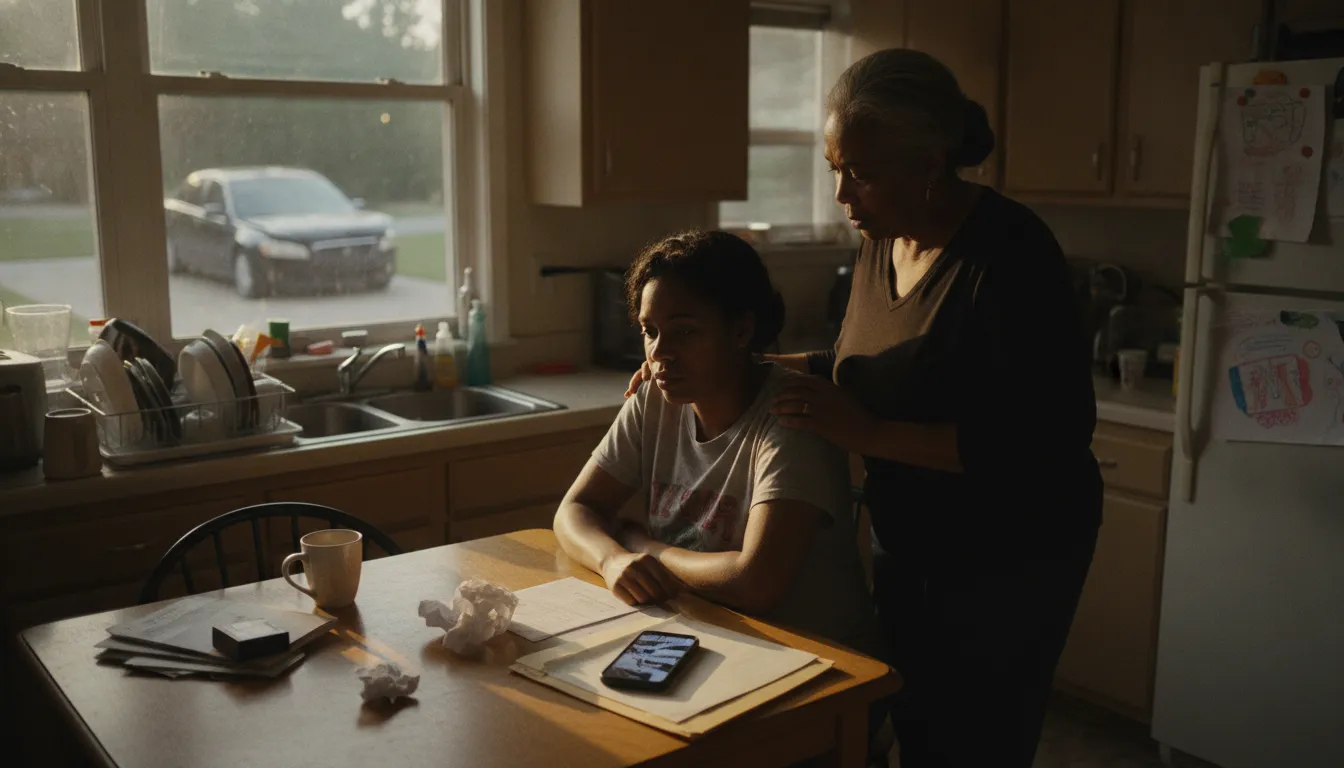
Injury can disrupt a household. One person may be coordinating care while another handles work, bills, and routine responsibilities. A legal conversation should make room for those practical concerns, not add confusion. It can help to bring a trusted family member to take notes, if you wish, while you explain the event in your own words.
Karega Law Firm’s three-generation family structure and direct work with clients are part of its stated approach. The firm says clients speak with family attorneys rather than being routed through a call center or case number. The team’s English-Spanish support can help clients communicate in the language they are most comfortable using. Ayuda legal en su idioma.
After initial contact, the firm says it sends a digital intake form for secure document uploads and a HIPAA release. It also says it handles insurance communication and can connect clients with local medical providers. Those connections are intended to help navigate care; they are not a medical endorsement or a guarantee of a particular provider. You can ask how document handling, communication, and next steps would work in your circumstances.
When deciding what to share, focus on accurate information. You can explain what you remember, identify what you do not know, and provide records you already have. A lawyer can ask follow-up questions and explain what else may be needed. You are not expected to use legal terminology to describe a fall.
No. A fall alone does not establish that anyone is legally responsible. The circumstances, evidence, and applicable law matter. A lawyer can review the facts and explain what can and cannot be determined.
Tell the lawyer what you remember about reporting the fall and what documents you do have. The absence of a report does not, by itself, answer whether a claim is possible. An attorney can discuss what other information may help clarify the event.
Images may help document an area if taking them is safe and lawful. Do not return to a hazardous place or disturb a condition to get a picture. If you already have images, preserve the originals and note when they were taken if you know.
You can ask legal questions while receiving care. Continue following medical guidance and do not delay treatment to gather paperwork. A consultation can address how an investigation and insurance communication may proceed while you focus on your health.
No. Explain what you observed and what you remember, without guessing. An investigation may help clarify what happened and identify records or other evidence that could provide more information.
Contact Us Today for a free consultation.
If you were injured on unsafe property in Marietta, Cobb County, or elsewhere in Georgia, you do not have to sort through every question alone. Contact Karega Law Firm to discuss your injury and learn whether further investigation may help; the family team can listen and explain possible next steps.
Learn when a premises liability attorney may help after a fall, what records can explain the incident, and how to prepare for a consultation in Georgia.

Learn how a job termination can affect Georgia workers’ compensation benefits, what facts matter, and what steps to take to protect your claim.
What to do the week after a car accident in Georgia: the report, the doctor visit, the insurance call, and what not to sign.